
Collecting
How to Build a Pokédex Binder: Order, Gaps and Variants
Plan a physical Pokédex binder with a chosen printing for each species, National Pokédex order, reserved gaps and separate lists for missing cards and upgrades.
Choose a single printing to represent each species, arrange those cards in National Pokédex order and leave a reserved pocket for every missing species within your chosen scope. This suggested approach keeps empty spaces meaningful: a missing Pokémon stays separate from a nicer printing or an extra foil finish you want later.
Set your binder rules before filling pockets
Write a short checklist inside the binder or alongside your want list. Decide what earns a species its place before arranging cards, so each new addition follows the same rules.
- Scope: name the species range or endpoint you want this binder to cover.
- Language: choose whether to use a single card language or allow a mixture.
- Printing: decide whether any printing you accept can fill a species pocket or whether you want a particular card.
- Finish: decide whether a foil finish is required for the main slot or belongs on an upgrade list.
- Forms: decide whether forms need extra pockets and where those pockets will go.
- Completion: count filled species positions separately from duplicates and extra finishes.
Forms need an explicit rule because they do not necessarily have separate National numbers. The official Pokédex groups Venusaur with Mega Venusaur, Charizard with Mega Charizard X and Mega Charizard Y, and Blastoise with Mega Blastoise under their respective species numbers. If you want extra form pockets, a separate section can preserve the order of your main species pages. That choice does not establish which card printings exist.
Use National numbers to place species
A National Pokédex number identifies a species in the sequence. An expansion collector number identifies a card within its set. Use the species number to choose the binder position and the card’s set and collector number to record the printing you selected.
For an optional nine-pocket opening page, read left to right across each row, then continue from top to bottom. Compare your pocket labels with this map before inserting cards: it gives each opening species a fixed position, including those you still need.
| Page row | Left pocket | Centre pocket | Right pocket |
|---|---|---|---|
| Top | 0001 · Bulbasaur | 0002 · Ivysaur | 0003 · Venusaur |
| Middle | 0004 · Charmander | 0005 · Charmeleon | 0006 · Charizard |
| Bottom | 0007 · Squirtle | 0008 · Wartortle | 0009 · Blastoise |
Keep reserved gaps when you reach a species you do not own. A temporary species label can make the gap easy to identify. Moving later cards forward would make each new find require another rearrangement and make the empty positions harder to follow.
Choose a printing, then track replacements separately
The English Bulbasaur pictured here is a possible physical choice for its species pocket. Your binder rules determine whether you choose this printing or another. Choosing an English card also does not require every other pocket to use English unless you set that rule.
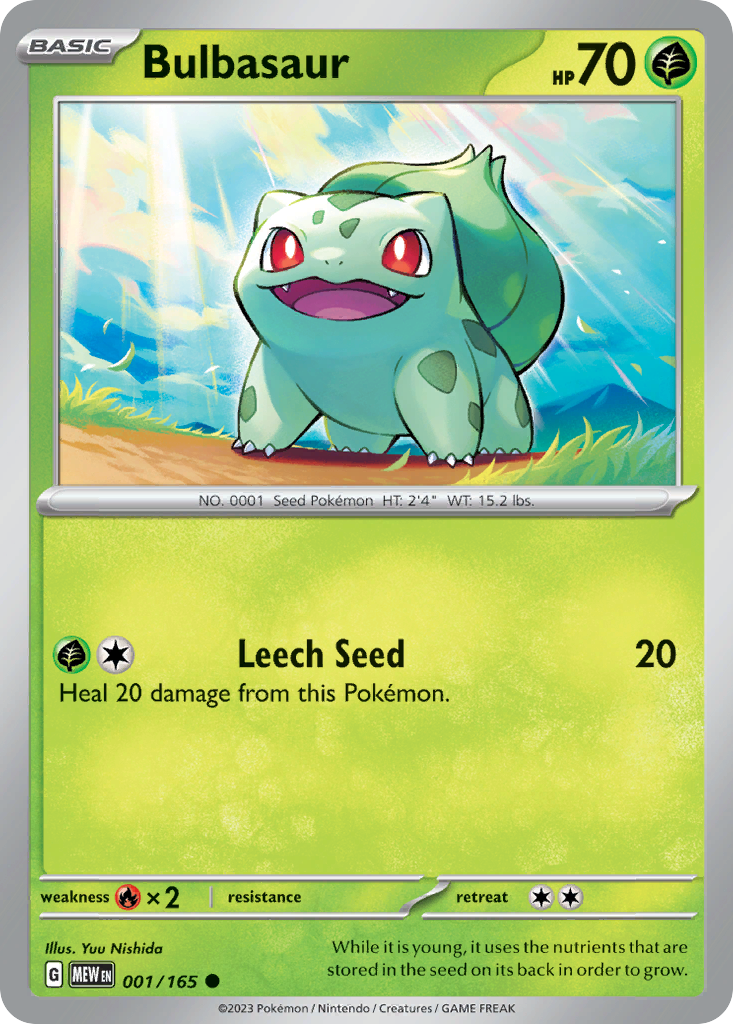
Give each want-list entry a clear purpose. “Missing species” means the main pocket still needs a card that meets your rules. “Replacement wanted” means an accepted card already fills that pocket, but you prefer another printing. “Extra finish wanted” records an additional collecting goal without treating it as another species.
If you later tighten your rules, review the affected pockets against the new standard. Keep duplicates outside the species completion count; extra copies do not fill a different Pokémon’s gap.
Acorn TCG can support this plan with a named custom collection for your binder or wishlist and separate owned quantities for the variants available on each card. Keep your written species checklist as the measure of physical binder completion, with replacements and extra finishes recorded as separate goals.
The card data used in this guide comes from the Acorn TCG catalogue.