
Practical guides
How Much Are My Pokémon Cards Worth? Identify the Exact Printing First
Identify your Pokémon card’s set, collector number, language and variant before comparing reference prices. Use this checklist to keep comparisons consistent.
Start by identifying the exact printing, then compare a reference price that matches your card’s variant and condition or grade. A Pokémon’s name alone is not enough to establish what your copy is worth. Even a matching card record can have several catalogued variants, and a displayed reference price is not a guaranteed sale price.
Build an identity before looking at value
Use the card’s name, set, collector number and printed language together as your starting point. Then check the edition and foil variant before comparing prices.
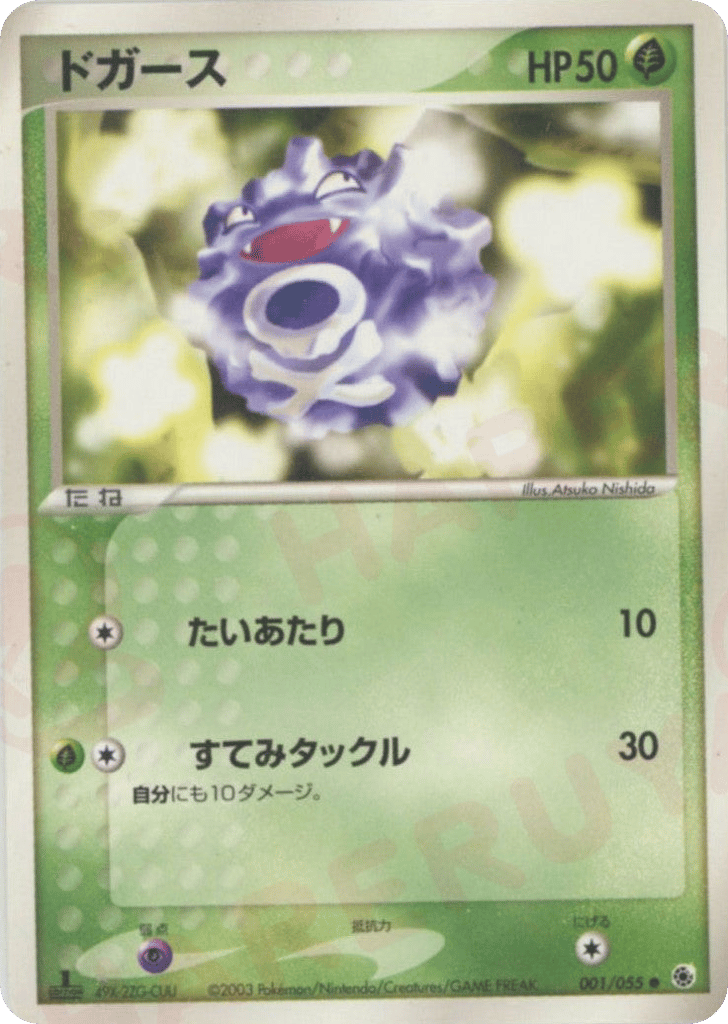
Koffing (ドガース) from the Japanese ADV Expansion Pack is a useful example: the same card has first-edition and unlimited versions. Matching its name, set and collector number still leaves the edition to check before choosing a price reference.
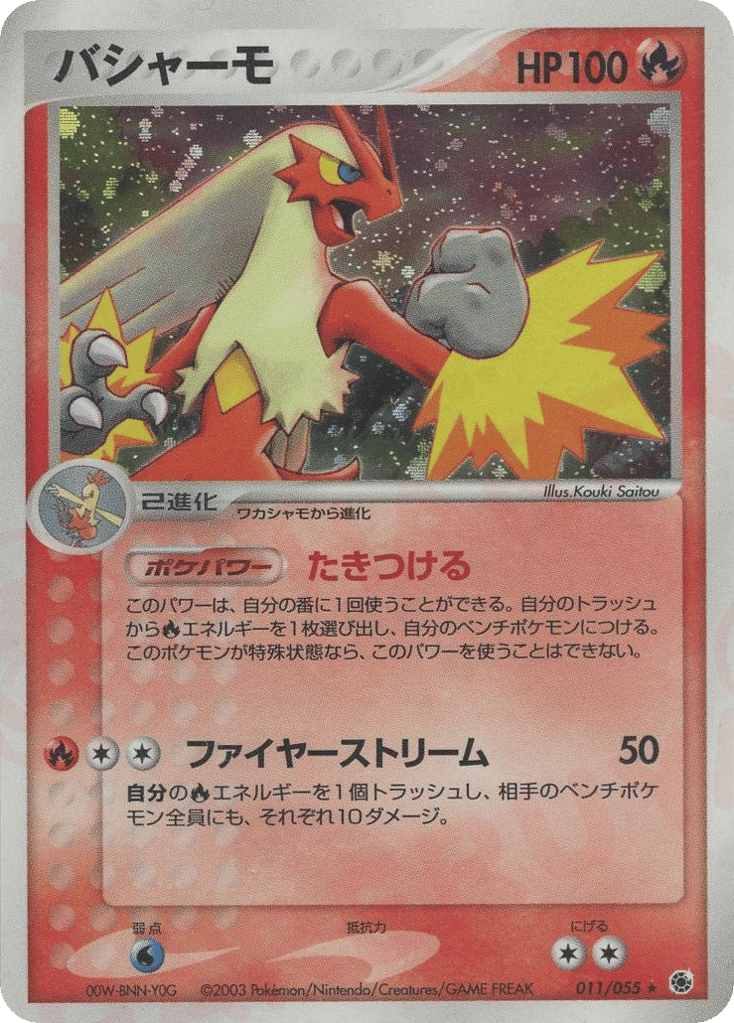
Blaziken (バシャーモ), from the same Japanese set, adds another distinction: its first-edition and unlimited versions are catalogued as holofoil. Check both the edition and the finish. These examples help identify the cards; a catalogue image cannot tell you the condition of your own copy.
A checklist for comparing prices
Before treating a price as relevant to your copy, work through this suggested checklist:
- Match the card name, set and collector number.
- Confirm the card language instead of substituting a record in another language.
- Resolve the edition and foil variant; leave uncertain details unresolved rather than guessing.
- Compare the same condition, or the same grading company and grade when using graded prices.
- Check the price source and what its metric measures. A listed asking price and a recent-sales-based metric answer different questions.
- Keep the currency and observation date consistent when comparing references.
Continue the comparison in Acorn TCG
Acorn TCG identifies Pokémon cards with the iPhone camera and lets you review the matching card. Use that match as the starting point for checking the printing. Card recognition does not authenticate your copy or assign it a professional grade.
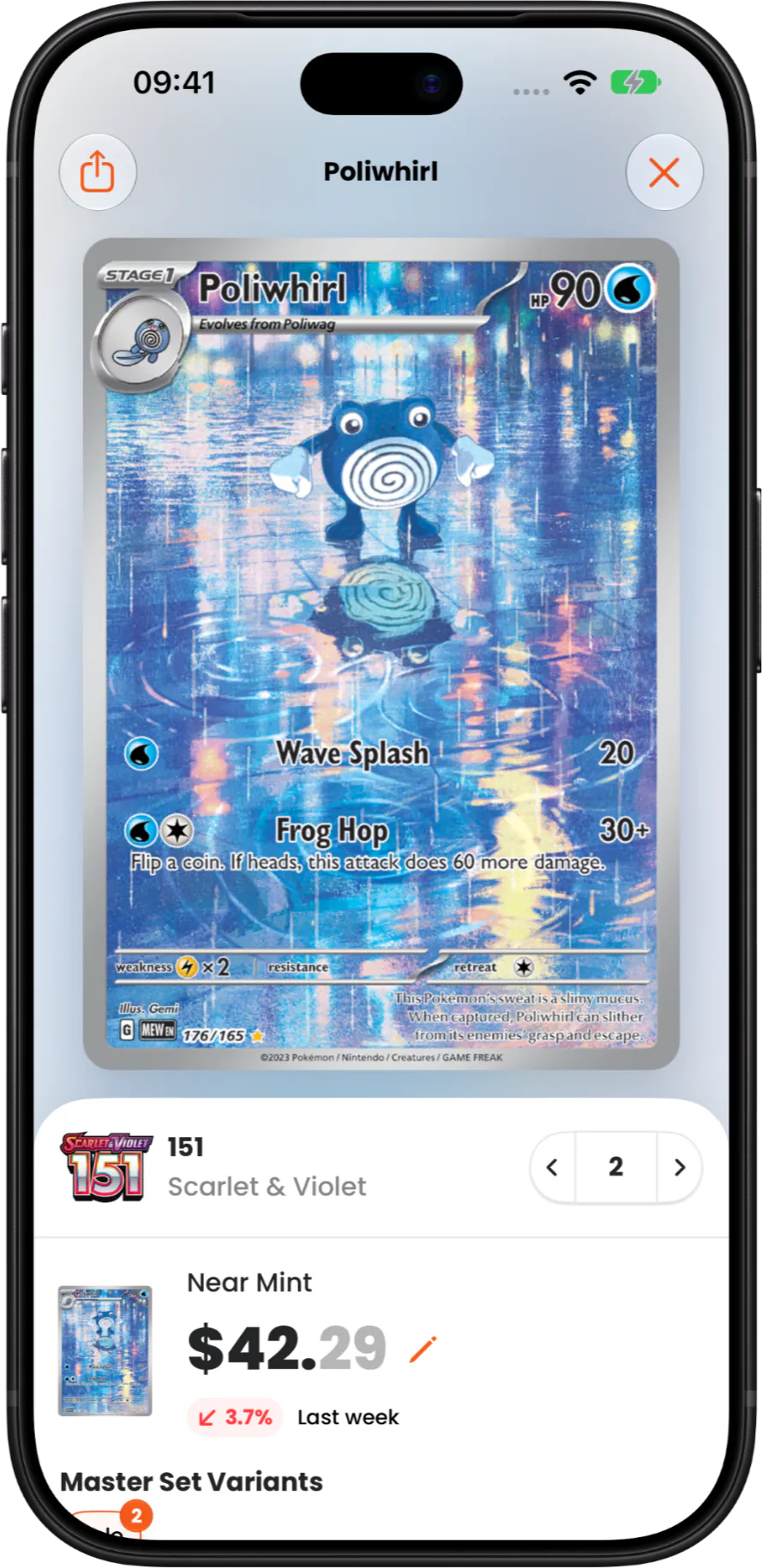
In the card details, check the label beside the reference price. Near Mint, for example, describes the condition associated with that price; it does not mean the app has assessed your physical card. Acorn also offers separate TCGplayer and Cardmarket price panels and options for grading companies and grades. Availability depends on the card, variant and grading option.
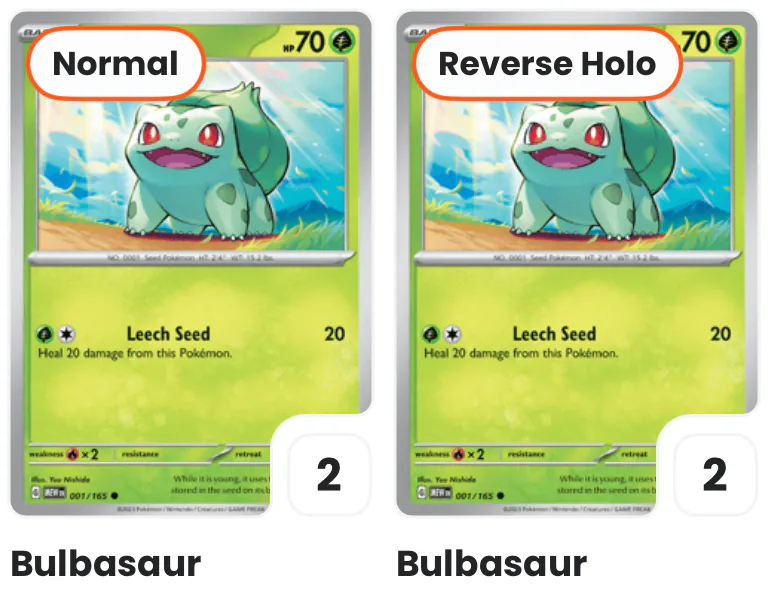
After identifying the variant, record the quantity you own in Acorn TCG. To see the variants as separate entries in Portfolio, enable Separate card variants in its filters. In the example below, Normal and Reverse Holo each have their own quantity, making it easier to keep copies organized for future price checks.
The card data used in this guide comes from the Acorn TCG catalogue.